
GTA Alagna – Pont Saint Martin
August 29 - September 3
The legendary GTA goes into the next round!
Saturday: Arrival by public transport
Sunday: Sant’ Antonio – Rifugio Rivetti
↑1343 hm ↓539 hm / 15.4 km / 7 h
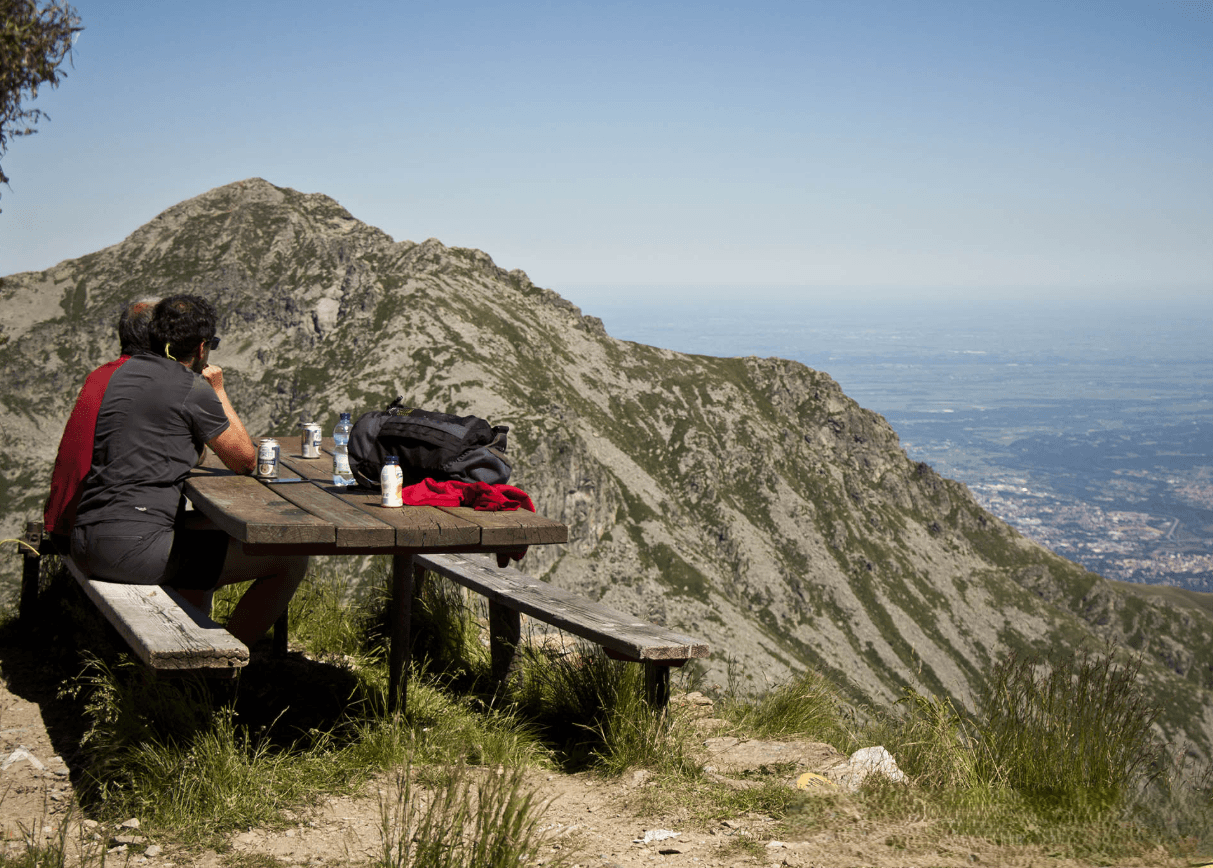
The trail continues upwards through the beautiful valley. The pastures and alpine meadows always offer beautiful views. The Passo del Maccogna requires surefootedness on the rocky ascent and even more so on the steep descent into the wide Torrente Loo valley. After another pass, 2 km of beautiful hillside path and a final descent, you reach the Rifugio Rivetti.
Monday: Rifugio Rivetti – Santuario San Giovanni
↑624 hm ↓1783 hm / 14.6 km / 7 h
The descent from the Rifugio (2150m) to Piedicavallo (1037m) is strenuous, but not difficult and scenic. Piedicavallo is the historic center of the upper Cervo Valley and is well worth a visit. The ascent continues through the forest to the Rifugio Madonna della Neve on a grassy ridge that juts out into the valley like a viewing platform.
The descent via the old, picturesque district of Desate to Rosazza is a delight. Rosazza is a surprising place with its 19th century buildings, in particular Frederic Rosazza’s castle-style house and the town hall. The destination, the pilgrimage site of San Giovanni with its impressive buildings, pilgrimage church and panoramic terrace, is impressive.
Tuesday: Santuario San Giovanni – Oropa
↑370 hm ↓271 hm / 11.8 km / 3:30 h
After a short stretch of road, this stage leads almost parallel to the altitude, first through forest, crossing several rivers and then across open pastures, finally through forest again to the impressive pilgrimage site of Oropa.
Oropa is the most important pilgrimage site in the Italian Alps and one of the most important in the entire Alpine region
The huge building complex was probably built on the site of a pre-Christian place of worship. A black Madonna from the 14th century, which is kept in the Basilica Antica, is venerated here. A sacred mountain was created in the 17th century. Pilgrims can see scenes from the life of the Virgin Mary and other biblical themes through small holes in the wooden latticed windows of the chapels. Together with 8 other Sacred Mounts, it has been a UNESCO World Heritage Site since 2003.
Wednesday: Rifugio Rosazza – Rifugion Coda – Trovinasse
↑715 hm ↓1200 hm / 14 km / 7 h
This stage between the Rifugio Rosazza and the Rifugio Coda offers an impressive high mountain landscape with wild boulder fields, airy passages and constantly changing views. From the cable car, the trail first leads through green alpine meadows to Lago del Mucrone, then continues over ridges and steep climbs up to Bocchetta del Lago – a viewpoint that rewards every effort. The final, challenging section is not nicknamed the “man killer” for nothing, but at the Rifugio Coda, a panorama opens up that stretches from Monte Rosa to Mont Blanc.from the Rifugio Coda, the route follows a green grassy ridge to Monte Bechit, a beautiful ridge path with a few iron steps. After the Colle della Lace, the route continues for a while on the road until you turn off towards Trovinasse.
Thursday: Trovinasse – Pont Saint Martin station
↑55 hm ↓1161 hm / 8.3 km / 3 h
From Agritourismo Belvedere, we cross into the original course of the GTA to Maletto. From there, the route heads downhill through beautiful forests on old farm tracks to the vineyards above Carema. You cross the old village of Carema, pass the church of San Rocca, which towers over a narrow valley, and then walk the last few meters to the train station. From here, trains run to Ivrea and from there to Milan and Brig.